
Your needs, this model
Does it fit your priorities?
How does Traverse trade storage against carry weight?
PING lists 6 lb empty, 15 pockets and 33 L, which is lower in weight and volume than Pioneer’s 8 lb and 35 L listing. Neither value measures loaded weight or ease of access on your cart.
Explore this need in the finder →What should I check about the top?
The page lists 14 ways, a putter well and duplicate putter wells. Check whether your clubs and oversize grips work in the layout; a high divider count alone cannot guarantee easy club return.
Explore this need in the finder →Does the cart-strap channel prove universal cart fit?
No. It documents a feature on the Traverse, not clamp spacing, strap clearance or pocket access on every push or riding cart. Try the mounted bag on your cart type before relying on the feature.
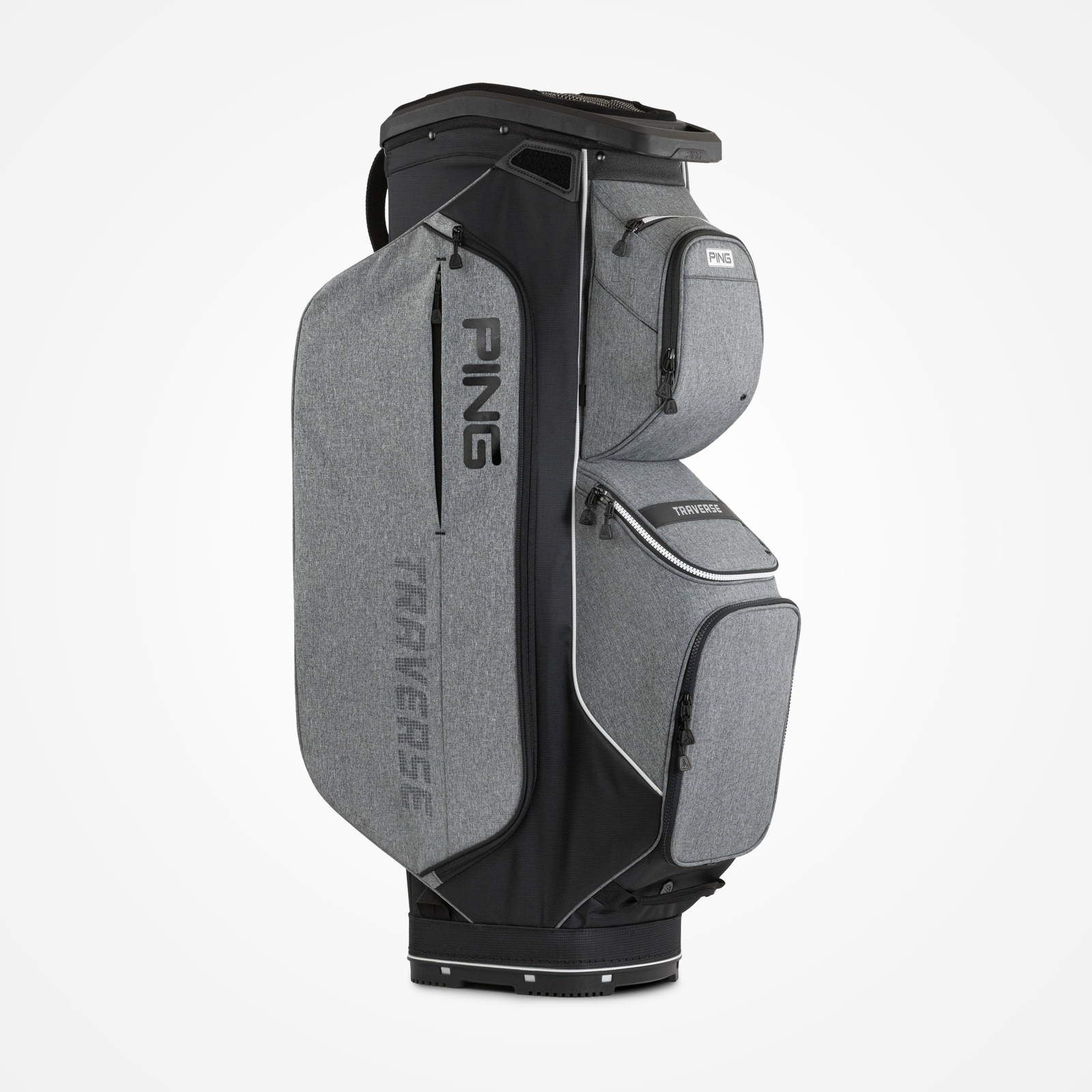
Explore this need in the finder →The PING Traverse is the lighter of the three cart bags assessed in this group by its stated empty weight: the US page lists 6 lb, a 14-way top, 15 pockets and 33 L of pocket volume. The top has a dedicated putter well and the feature list mentions duplicate putter wells; storage is tiered, and a divided rangefinder pocket is called out specifically. PING also lists a cart-strap channel and a rain hood. Taken together, those details make Traverse an interesting cart-first option for golfers who want organization without the higher published weight of PING’s Pioneer or DLX.
Cart category and mounting details
PING places Traverse on its US Cart Bags shelf and the product page explicitly lists a cart-strap channel. This gives a clear manufacturer basis for its cart use. The channel is not a compatibility certificate for every riding cart or push-cart cradle. Cart straps and clamps vary, and a bag can be held securely while still making particular pockets awkward to reach. Check the actual restraint path, stand clearance and pocket access on the cart you expect to use.
Although the 6 lb figure is low next to many large cart-oriented bags, the page does not document a shoulder strap arrangement for walking. That weight should not be interpreted as proof of comfortable carry. If your normal round involves carrying the bag across the course, choose a bag whose strap arrangement and intended use are clearly documented.
Fourteen ways and multiple putter wells
The Traverse top is specified as 14-way. PING says the putter gets its own well and separately lists duplicate putter wells for flexibility. The additional position may be useful for a golfer who wants a choice of putter placement; the product page does not explain which well works best with every putter length or grip. Try your own putter and largest grips before assuming the layout avoids crowding.
Traverse sits between Pioneer and DLX in the published divider and volume figures: Pioneer lists 15 ways and 35 L; DLX lists 15 ways and 34 L; Traverse lists 14 ways and 33 L. That is one fewer way than the other two but also the lowest listed empty weight. The difference is a comparison aid, not a controlled load or club-access test. The top’s shape, the way clubs are grouped and the size of the grip can matter more than the raw section count.
Tiered pockets and a divided rangefinder pocket
The page identifies 15 pockets and a tiered arrangement. PING says the tiering makes pockets easier to access, but the source does not provide a test, dimensions or a setup diagram for every cart. The rangefinder pocket has its own dividers, a more precise detail than a general pocket-count claim. If you carry a rangefinder, check how it sits in that compartment and whether the mounted bag leaves it reachable. The source does not establish that all rangefinder sizes fit.
One pocket is insulated and specifically marked not waterproof. That label is useful because it prevents a common inference: insulation does not establish waterproof construction. The manufacturer lists a Rain Hood on the Traverse page, while the full-bag record does not give a waterproof rating or seam-performance claim. Confirm the exact seller’s hood contents and pack separate weather protection when conditions warrant it.
How the weight and storage trade off
At 6 lb empty, Traverse is lighter than Pioneer (8 lb) and DLX (9.5 lb) on PING’s published figures. Its 33 L volume is below their 35 L and 34 L, respectively; its pocket count is 15, matching DLX but one less than Pioneer. If a cart carries the bag for most of the round, the weight difference may be less important than which pockets your routine needs. If you load and unload it often, an empty 6 lb specification may matter—but clubs, balls, water and clothing still add to the lift.
The reviewed page does not identify the shell material. I have not inferred it from the heathered image or borrowed the vinyl leather material listed on DLX. It also does not offer a whole-bag waterproof rating, loaded-weight measurement or confirmed pocket dimensions. Those remain open checks rather than features to guess.
Choose the finish without losing the model identity
PING groups six color names under the Traverse family. The verified image here shows Heather Grey/Black, child SKU 37656-02. Black, Navy/Heather Sand/White, Blue Isles, Grey/Platinum/Atlantic and Lilac/Plum are separately identified child variants. The product-level page provides one shared feature specification set; it does not state that one color changes the divider design or transport features. Match the color label and exact SKU to the seller’s offer, especially if a swatch image is used for more than one size or season.
Who should keep Traverse on the list?
Traverse is a plausible comparison for someone seeking a cart-bag category product, a listed channel, 14-way top organization, a divided rangefinder compartment and a lower empty-weight figure than PING’s Pioneer and DLX. Pioneer offers more published pocket volume and a removable valuables pouch. DLX offers a nylon rain hood, deployable shoe pouches and dual valuables pockets, but weighs more empty. These distinctions matter only if they line up with your own cart, clubs and packing list.
Before choosing Traverse, inspect the 14-way top with your grips and putter; confirm the rain hood in the seller’s package; and check that the cart channel leaves your favorite pockets accessible. Treat 6 lb as the empty-bag specification, not a loaded figure or comfort result. This review is based on the exact PING US product page and image, not a personal carry, fitting, cart or weather test.
Key specifications
Key details at a glance
| Bag category | Cart bag |
|---|---|
| Top divider layout | 14-way top |
| Empty bag weight | 6 lb |
| Pocket count | 15 |
| Pocket volume (range floor) | 33 L |
| Cart-strap channel | Yes |
Use the exact model’s instructions for operating limits, supplied equipment and version differences.
Sources for this review
Sources for this assessment
See whether this setup fits your round
Compare the bag's documented configuration with your walking, cart, divider and storage needs; then verify the exact finish and package with the seller.